
Resilience comes through preparedness, and preparedness comes through collaboration and systems thinking. This year’s Euro-CASE conference – the annual meeting of the European Council of Academies of Science and Engineering – focused on Engineering Resilience: securing Europe’s critical infrastructure in a changing world. Euro-CASE fosters international collaboration and partnerships through engineering, which is essential if countries in Europe and globally are to be resilient to the growing threats to security and the services we all depend on.
The conference showcased insights from experts preparing for, mitigating and responding to major crises and ongoing threats - and working to build a resilience mindset. Key to that is a shift from predicting events to preparing and protecting what is important when the unpredictable actually happens.
Mark Mellett: In a crisis, trust itself becomes critical infrastructure
Resilience depends on infrastructure that will deliver even after the worst happens, and our physical infrastructure needs engineers to enable it to provide essential services and recover after crises. It was clear, however, that this is not a purely technological issue or a matter of physical infrastructure being preserved.
It is also about relationships, networks, and the basis for strong cooperation between people and systems. This is both collaboration between those managing and controlling systems, and in society as a whole. As Enrico Zio said “knowledge is needed from asset level to societal level”.
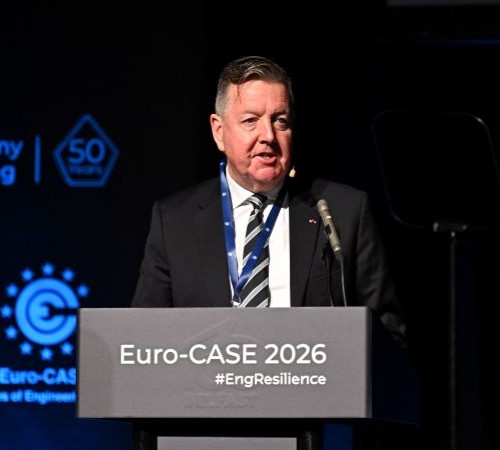
Mark Mellett
Joshua Macabuag OBE FREng: What we see after the event shows the decisions not made before
This is not just about reacting when a crisis comes. It is about being ready for that crisis, through creating a state of preparedness. Joshua Macabuag shared footage of real rescues from buildings collapsed due to earthquake, bringing to the room the human lives at risk and the crucial need to save them. But he also talked about the need to be prepared in advance, demonstrating how catastrophe modelling can help us to understand what could fail and what the impacts might be. As John Zammit-Haber, Head of Resilience for the National Energy System Operator put it, we cannot prevent all hazards, and we need to focus “not simply on what might fail, but what happens when it does.”
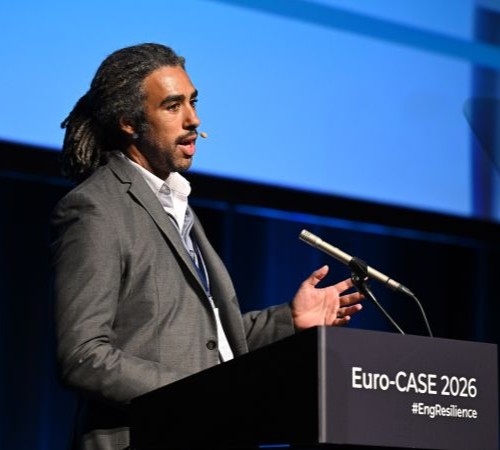
Joshua Macabuag OBE FREng
Tina Comes: When talking to policymakers, focus on what is the worst that can happen, not what the risk is
Shifting to a preparedness and resilience mindset requires a change in ways of thinking and planning. The long-standing approach has been to quantify risk on the basis of likelihood. We talk for example of one in one hundred year flood risks, but this is not meaningful to many outside of technical specialisms and can give a false sense of security and a reason to avoid investing in resilience. We need instead to be clear on what the impacts of failure can be. For example, Roberto Palacin presented an example of a failure in a single wall of one railway arch that had systemic impacts across the whole GB rail system for 28 days. This carried huge costs and a major impact to the economy – and to people dependent on that rail system to get to work, and to live their lives.
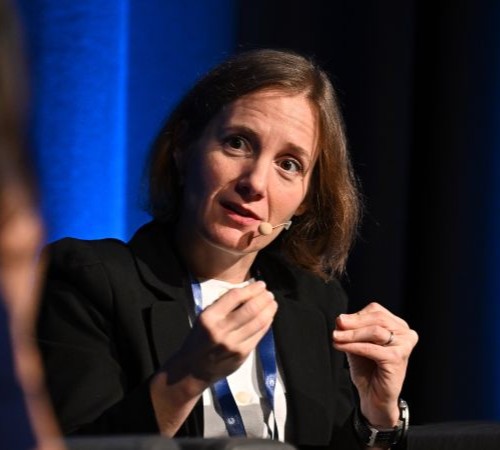
Tina Comes
Andy Lord: We have to invest in our existing assets
This is why resilience also requires investment in maintaining our infrastructure to prevent failure. Andy Lord, Commissioner for Transport for London (TfL), talked about working with a system so large that its total energy use is greater than that of the city of Birmingham, yet relies on infrastructure that can be up to 170 years old. Building new is not always an option but instead there is a vital need to maintain what we have – as argued in the Academy’s recent report Reviving our ageing infrastructure. Alongside this is managing the modern systems which these physical systems depend on, and these are an increasing point of vulnerability. Andy spoke of the intense work done within TfL to preserve transport services in the wake of a cyber-attack which took out some customer-facing travelcard systems, but did not impact transport – though not without incurring costs of £29m.
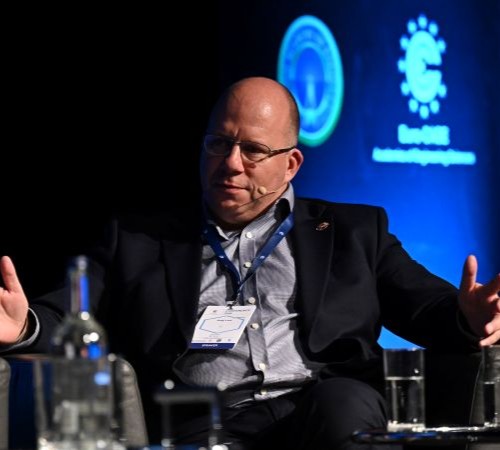
Andy Lord
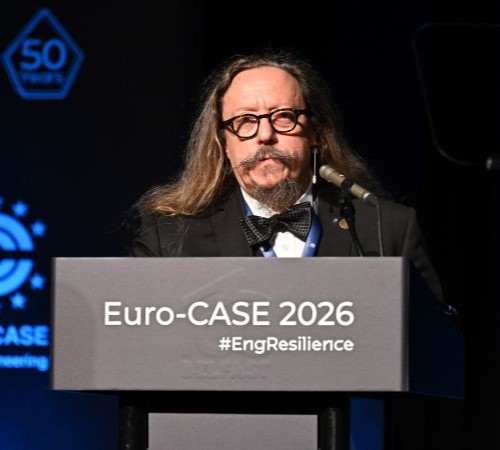
Patrik Fältström: No one knew that a Fridge was an IT system
The vulnerability of our digital systems is increasingly seen through the physical systems in which they are embedded. This was made clear by the recent cyberattacks which remotely heated up supermarket fridges, causing huge food wastage and business costs. For this reason, we have to draw our system boundaries much more broadly and consider how these system elements interconnect. Systems such as commercial food storage become part of our critical infrastructure when they fail at scale, taking out access to food. Cascade risk occurs when these systems are interconnected and interdependent, so that no failure occurs in isolation. As Simin Nadjm-Tehrani said in answer to her top three words on building a resilient system, what matters is “dependency, dependency, dependency”.
Patrik Fältström
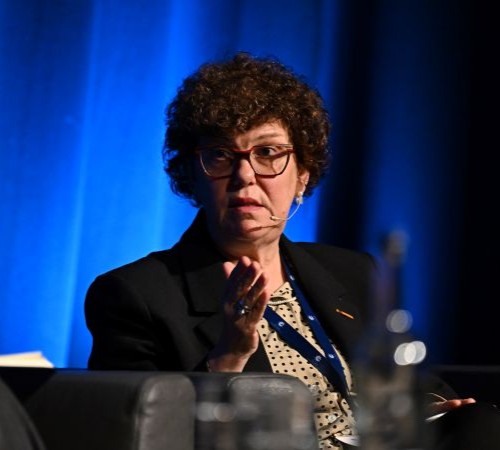
Dimitra Simeonidou OBE, FREng, FIEEE: Confidence should depend on what is tested and verified not what we assume is going to be available
Vulnerabilities are highest when the foundations of a system rest on assumptions. These assumptions need to be surfaced and tested, through preparedness exercises that highlight what can fail, what then happens, and what we need to preserve when it does. These exercises also help show where a critical capability rests on a system over which we have no control – as seen by the major Microsoft outages, causing impacts from businesses to healthcare which the impacted organisations had no way of managing directly. This is why knowing vulnerabilities is key, surfacing single points of failure, then being clear on what we must preserve. Protecting diversity in underpinning technologies and systems can help to provide resilience, alongside taking care not to increase vulnerabilities through connected systems. For example, adopting technologies such as AI in a way that does not meet clear business or services needs, or is not well tested, can create greater risk, not greater control.
Dimitra Simeonidou OBE FREng FIEEE
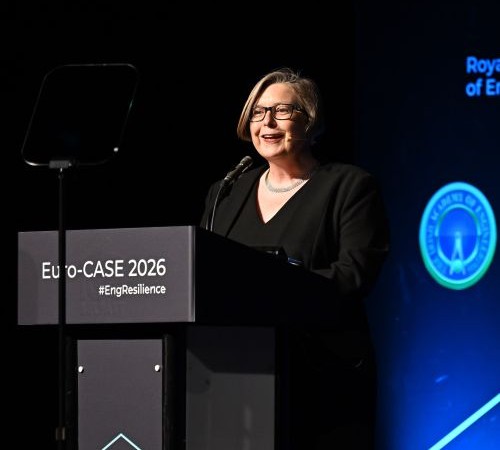
Sarah Prichard: Collaboration is essential, but we should make responsibility clearer, not more diffuse
Preparedness, resilience and capability in a crisis needs systems thinking and a whole of society approach. This is increasingly so as our infrastructure systems become more complex. Siloes are the enemy of systems, and breaking them down is essential. However, systems thinking does not mean a lack of overall control. In fact, it requires greater systems oversight so that there is a clear point of responsibility and control when systems fail, and can provide the overarching perspective needed to identify risks and address them in advance. Through this we get to a point of resilience and preparedness.
Collaboration under that clear point of responsibility is key. As poet Maria McManus said in her piece written for the event, “This final glass ceiling belongs to all of us, it must not shatter”. Protecting the world we live in needs all of us, together.
Sarah Prichard
Related content
The tensions and trade-offs of dual-use technologies
A challenge paper raising tensions and trade-offs within our current dual-use frameworks and how we use the term.
Reviving our ageing infrastructure report
This 2025 National Engineering Policy Centre report outlines the critical challenges faced by our ageing infrastructure…
Why faster, better digitalisation is critical to UK energy goals
A new report from the National Engineering Policy Centre urging for prioritisation of digitalisation to secure Clean Po…