
The Academy makes five awards of £3,000 each year to UK engineers in full-time higher education, research or industrial employment, who have demonstrated excellence in the early stage of their career (defined as less than ten years since graduation from their first degree in engineering or equivalent qualification on the day of the submission deadline).
From these five awardees, the Academy’s Awards Committee will select an overall winner who, in addition to their cash award, will receive the Academy’s Sir George Macfarlane Medal.
New for 2026: for the first time, we are inviting both nominations and self-applications for the RAEng Young Engineer of the Year award. Self-applications can be submitted by any early-career engineer who meets the eligibility criteria.
Who is eligible to be nominated?
Engineers who are eligible for the RAEng Young Engineer of the Year will satisfy the below criteria:
- An early-career engineer who received their first engineering degree (or equivalent qualification) less than 10 years before 14 October 2025.
- An engineer who has demonstrated excellence within either academia or industry.
2026 Sir George Macfarlane Medal winner
Brogan MacDonald
Head of Sustainability in Building Structures at Ramboll UK, Brogan helps shape the company's strategy for sustainable change and drives delivery of low-carbon, resource-efficient outcomes across the built environment.
A Chartered Civil Engineer and Chartered Environmentalist, Brogan champions material reuse, embodied‑carbon reduction and regenerative design principles. Her work includes the creative retrofit and retention of the Westbury Hotel over four years, leading the technical design and project management. By auditing the existing reinforced-concrete frame and challenging the demolition brief, she enabled the reuse of the existing frame and saved 5,000 tonnes of demolition material and 3,500 tonnes of embodied carbon.
Outside work, Brogan is a strong advocate for encouraging women in STEM and sustainability, mentoring and inspiring the next generation.

2026 RAEng Young Engineers of the Year
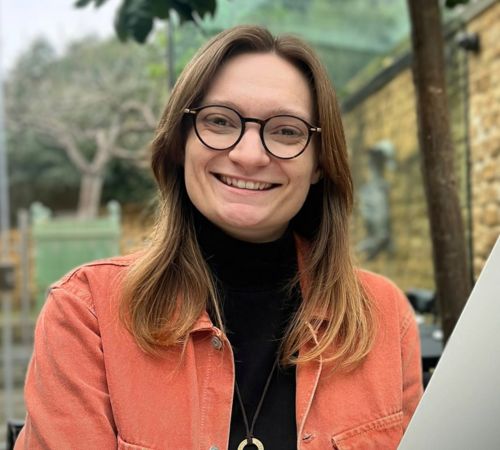
Laura Tuck
R&D Lead, The Washing Machine Project
Laura is a design engineer driven by a commitment to gender equity and has dedicated her career to developing products that empower women and address overlooked needs.
At Elvie (a wireless and wearable discreet breast pump), she contributed to the development of innovative breast pumps that challenges outdated, restrictive designs. She then spent time at Peequal (a sustainble 'squat' urinal), where she worked to tackle systemic inequality in public sanitation.
She now works with The Washing Machine Project, which provides manual washing machines in low-income, remote and displaced communities across the world, designing solutions to reduce the burden of handwashing clothes, a task that affects up to half of women and girls globally.

Douglas Brion
Founder and CEO of Matta
With Matta Douglas is building industrial AI for factory sentience. Matta's vision based AI handles the local jobs on the factory floor - detecting defects, measuring parts, counting inventory, reading barcodes - and connects them through a platform that tracks parts end-to-end, surfaces bottlenecks, and lets operators talk directly to their factory through an AI assistant to improve production. Matta is now deploying into two new factories every month, backed by $14 million in seed funding.
Before Matta, Douglas completed an award-winning PhD at the University of Cambridge in deep learning for manufacturing and received a Royal Academy of Engineering Enterprise Fellowship. He holds a degree in information engineering from Imperial College London, where he graduated with the Governors’ Prize, while also studying as an Ash Scholar at the Royal College of Music.
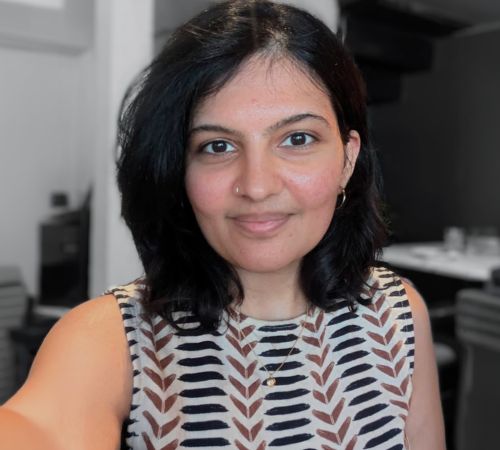
Aakeen Parikh
Research Manager, Vehicle Future Hub, Imperial College London. Founder, The Minazi Impact.
During her final year at university, Aakeen felt growing concern about key global issues like climate change and social injustice and started to investigate innovative solutions to address them. Aakeen developed a low-cost, battery-powered washing machine for rural communities and set up a social enterprise, The Minazi Impact, to dedicate her efforts towards sustainable innovation.
She leads on the Sanitary Pad Project in Rwanda, collaborating with a grassroots NGO, Dufatanye Organisation, where she helped install a bespoke facility that can produce reusable sanitary pads from local waste resources. To date, the project has distributed over 3,000 sustainable sanitary pads to women and girls in Nyanza, Rwanda.
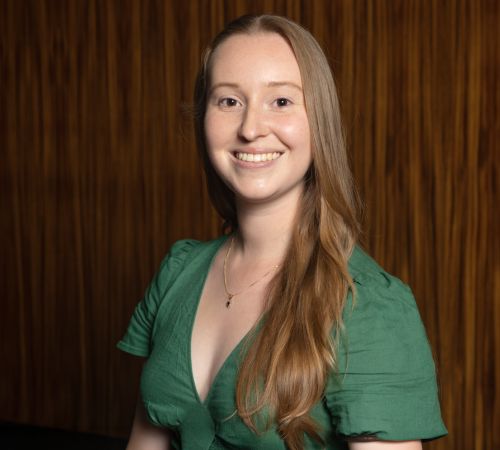
Alexia Williams MBE
Technical Lead at Rolls-Royce
Alexia specialises in improving the performance, sustainability, and longevity of complex engineering systems. She is one of just 12 women to achieve Chartered Engineer status aged 25 or under, reflecting both her technical excellence and early career impact.
Beyond her technical role, Alexia is a prominent voice shaping the future of engineering skills and policy. She has served as Chair of the Skills England Apprentice Panel and is a Trustee of Enginuity, Non-Executive Director at EAL, and Chair of the MAKE UK Future Makers group, ensuring that the perspectives of young professionals are embedded in decision-making at the highest levels.
Alexia is also a dedicated advocate for widening participation, particularly for women in STEM, and champions apprenticeships as an inclusive route into engineering careers.
Awardees from across the years



News about the RAEng Young Engineer of the Year awards

Royal Academy of Engineering celebrates outstanding Young Engineers of the Year
Five young engineers who have made significant contributions to engineering have each won a prestigious award and a £3,000 prize from the Academy to recognise their incredible work in their respectiv…

Green wireless charging whizz wins top Academy award
Electronics lecturer and entrepreneur Dr Mahmoud Wagih has won one of the Royal Academy of Engineering’s top awards for his work developing wireless power and sensing technologies that could pave the…