
Project overview
For years, Dr Pratisthit Lal Shrestha had been asking a simple question: how can Nepal produce assistive technology sustainably and domestically?
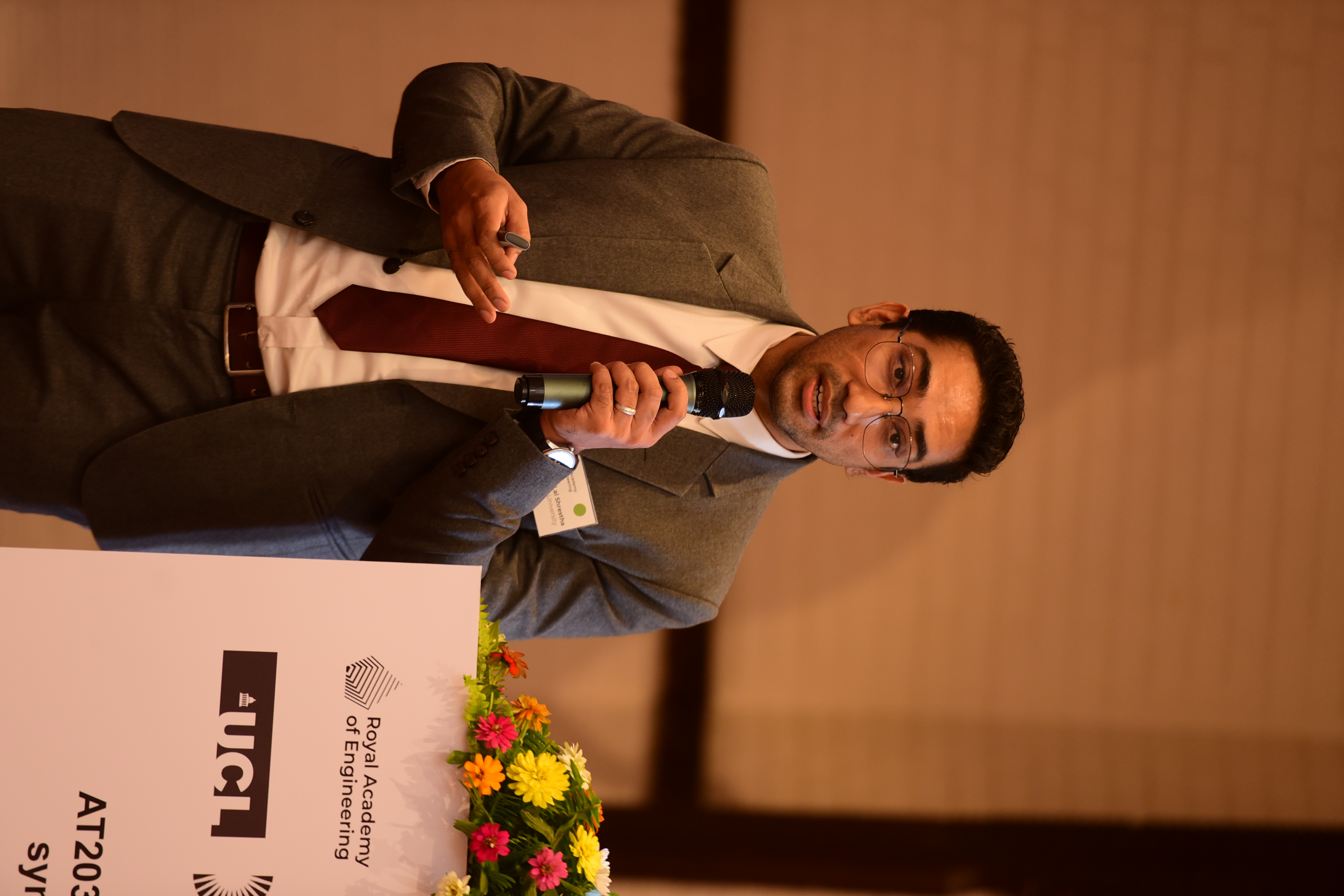
The answer to that question became clearer at the AT2030 Frontiers Symposium in Kathmandu, where Dr Pratisthit attended alongside Amit Ratna Bajracharya, a prosthetist with decades of experience working with AT users. There, they met Dr Yogesheveran Nagarajan.
The conversations that followed sparked a shared ambition to create Limb Cycle: a response to Nepal’s heavy reliance on expensive imports, which make AT inaccessible for many users across the country. Seed funding awarded after the symposium, a collaboration between the Royal Academy of Engineering and UCL Global Disability Innovation (GDI) Hub’s AT2030 Programme, funded by UK International Development, enabled the team to turn their ambition into a practical project.
The challenge: accessible assistive technology in Nepal
A number of gadgets hang on the office wall of Dr Pratisthit at Kathmandu University ’s mechanical engineering department in Dhulikhel, Kavre. They are signs of an idea starting to take shape.
“I have flat feet so I 3D printed these insoles, which improve weight distribution and make walking more comfortable,” says Dr Pratisthit. He believes that with emerging technologies we can get closer to enabling universal access to healthcare.
"A circular approach is necessary to support domestic production, and ensure a reliable supply of raw materials, which are otherwise difficult to source in a land-locked country like Nepal.”
Dr Pratisthit
Project solution: local, circular production
Outside his office, students are busy tinkering at their workstations. One is typing code into a screen. He is currently working on the AI agent that will guide and support 3D printing in the Limb Cycle project. “We realised that certain support systems need to be Nepal-specific from the ground up. This is true for AI agents, we cannot rely on code and data from elsewhere, so we are building one ourselves,” explains Shrestha about the project’s objectives. Alongside AI, 3D printing plays a crucial role in building a more efficient ecosystem aimed at reducing costs and improving outcomes for AT users. The approach is expected to ease pressure on clinicians as well, who are already working under significant strain.
Several buildings away on campus, another group of engineers is huddled around a small machine inside KU’s Design Lab where Dr Pratisthit serves as the principal investigator. It is full of furniture made from recycled plastic and other synthetic materials. The students are the first point in production. The small machine they are waiting on pushes out a filament of PVA plastic.
Without access to raw materials, it would be impossible to reduce the costs of AT in Nepal. At the Design Lab, students are working on a solution: producing filaments from plastic pellets and aiming to incorporate recycled plastics through the Limb Cycle project. “A circular approach is necessary to support domestic production, and ensure a reliable supply of raw materials, which are otherwise difficult to source in a land-locked country like Nepal,” explains Dr Pratisthit.
AT is never a one-time investment. In fact, most users should ideally update their aids every few months. While this is more apparent for children who grow quickly, it is also true for adults whose bodies may change from a myriad of factors. That is why Dr Pratisthit and his partners are striving to create a system that allows easy maintenance and upgrades for users.
Treating patients in Nepal’s prosthetics landscape
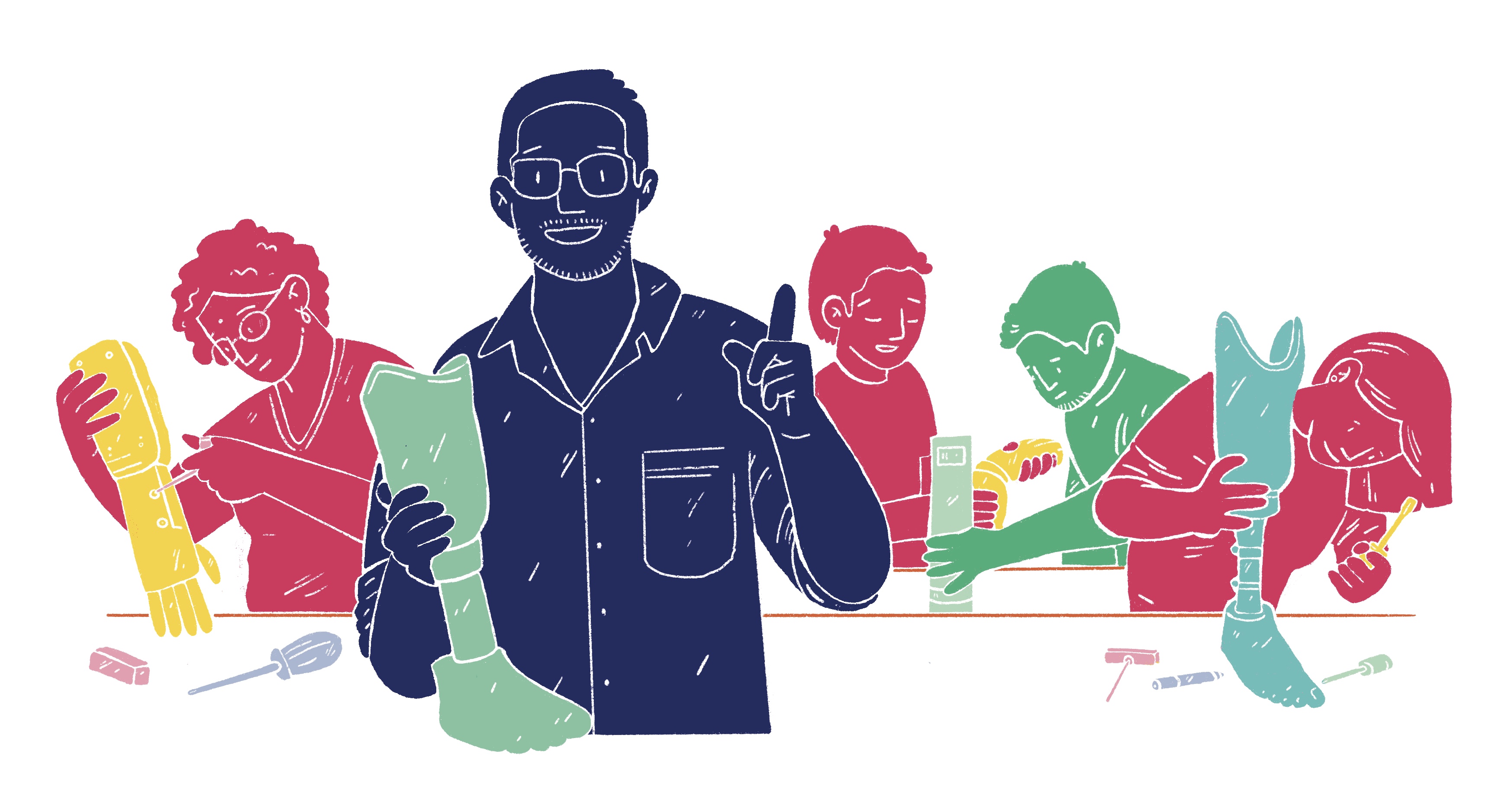
While Dr Pratisthit and his students are focused on the technological side of production, miles away in the north of Kathmandu Valley, Amit works directly with AT users at his clinic in Budhanilkantha. As one of only a handful of certified prosthetists active in Nepal, Amit operates within a system that faces both resource and structural constraints. He has spent years not only treating patients but also researching and documenting the country’s prosthetics landscape. “The history of prosthetics in Nepal is interesting, to say the least, and things have come a long way. But the charity model of disability continues to be the prevalent model. This does not allow room for policy improvements and investment in local AT,” explains Amit.
Amit and Dr Pratisthit have known each other for some time, but the Limb-cycle project is their first time collaborating. Dr Pratisthit initially connected with Amit precisely for his knowledge and experience in AT, gained while pursuing his doctorate, which focused on domestically manufacturing a synthetic knee joint. Amit appreciates Limb Cycle’s efforts to nationalise production but also reiterates the need to focus on the people. “It is inherently a people-centered engagement that requires a lot of empathy. We can make the work more effective and free up professional time for more patient care, but I do not think we can completely replace expertise and experience with AI,” shares Amit.
Through their individual contributions, the duo represents the breadth of an alternative production chain, from raw materials to the end user. Connecting with Yogeshvaran from De Montfort University, UK at the AT2025 Frontiers symposium was a catalyst for Limb Cycle.
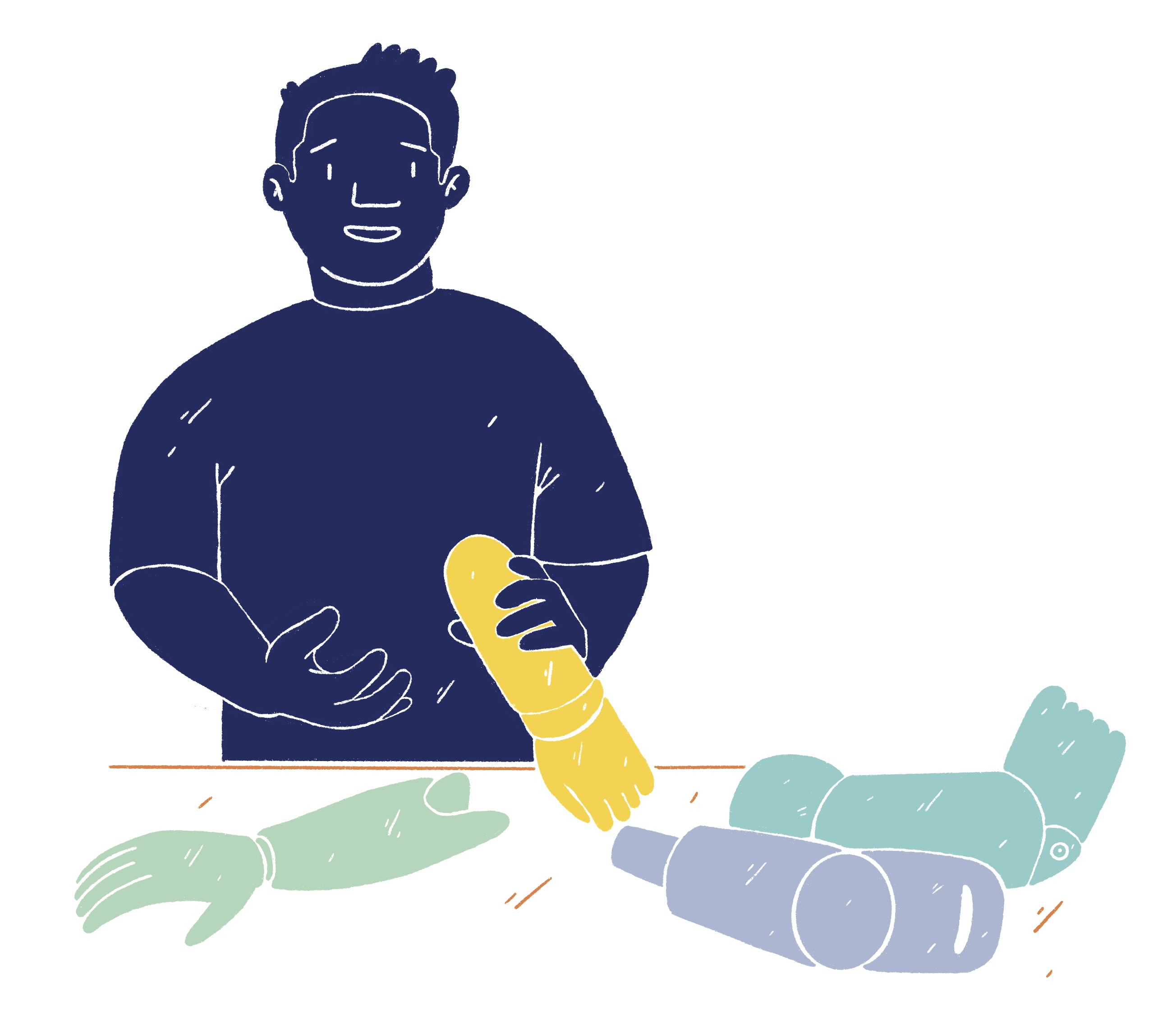
Like Dr Pratisthit, Yogeshavaran is a mechanical engineer who completed his PhD on prosthetics; his focus was the potential of composite materials in AT fabrication, an area directly aligned with the team’s vision of cost effective and sustainable AT for Nepalis. He had researched Jaipur Foot in India which has enhanced access to prosthetics across India and in the subcontinent through innovation and people-centred approach.
“My research area is composite materials, particularly recycled plastics and how they can be used as an alternative raw material for AT in the Global South. In India, where my research was conducted, plastic pollution is a serious concern. Reevaluating the waste as a raw material makes a lot of sense and creates multiple benefits,” expands Yogeshavaran.
His expertise in composite materials, combined with access to international datasets, could help address some of the difficulties involved in producing prosthetics domestically in Nepal.

When we had the opportunity to apply for the AT2030 Frontiers seed funding grant, everything coalesced naturally.
Dr Pratisthit
From AI model prototype to scale
Now several months into implementation, Limb Cycle has already produced a working prototype of their AI model and is moving into trials through Amit’s clinic in Kathmandu. In the coming months, Limb Cycle will be rolled out to users through the clinic. Amit and colleagues will monitor the quality and processes of the first prototypes to make improvements and generate additional data to enhance AI capabilities.
The team’s vision is really for technology to support people in the ways they need it to. For Dr Pratisthit and Amit in Nepal, the project is about improving systems, with a focus on developing the prerequisites that can drive innovation and scale undeterred by Nepal’s geographic remoteness. To achieve this, Limb Cycle plans to release a public (and free) version of their software to relevant institutions, enabling clinicians and students to test the system, provide feedback and improve its functionality in the long run.
Currently, the project is focused on producing lower limb sockets, but with a strong foundation in place, it is effectively replicable for other types of prosthetics covering all types of user needs. To sustain their movement towards achieving domestic production, the team is proactively engaging stakeholders and the national healthcare systems to encourage adoption and endorsement of their outputs, helping to ensure continuity.
Another way the Limb Cycle will be institutionalised is by making KU’s Design Lab the custodian of the project’s intellectual property. This will ensure continuity and a base for further research and development steered by a diverse committee of clinical and academic members. And in the UK, Yogeshvaran anticipates valuable insights from the pilot. He is connected to a network looking for relevant AT solutions, who could consider a similar approach to their own contexts.
Ultimately, the collaborators see the project as a flagship Nepal-born innovation in global assistive technology.
Assistive technology facts
- More than 10% of Nepal’s population is estimated to require at least one assistive product, including mobility, hearing, vision, and communication devices.
- Globally, nearly 90% of people who need assistive technology in low-income countries do not have adequate access, reflecting major service gaps also experienced in Nepal.
- Nepal imports most of its assistive products and components, contributing to high costs and limited repair services, especially outside urban centres.
- The WHO-UNICEF Global Report estimates that over 2.5 billion people worldwide currently need assistive technology, with demand expected to rise to 3.5 billion by 2050.
- Low-cost digital manufacturing methods, including AI-assisted design and 3D printing, can significantly reduce the cost of customised assistive devices compared to imported alternatives.
Interested in participating in the Frontiers programme?
Visit our Symposia pages for more information including eligibility.