
The Energy Security and Net Zero Committee’s latest report ‘Zero Sum Game’ rightly calls out the changing nature of debate on climate change, and the public narrative on both emissions reduction and climate adaptation. It is absolutely right that public and political discourse should reflect the breadth and complexity of the energy transition, in terms of the needs it must meet and the share of opportunities it can create. The report also highlights a role for the National Academies, which includes the Royal Academy of Engineering, and suggests that we have should take a more prominent position.
We agree that the National Academies have a key role in engaging with the public on both the realities of climate change and the energy transition, and the actions needed to address it. Indeed, we are proud of our extensive record of developing and sharing robust evidence and explanation. As set out in response to a previous parliamentary inquiry on misinformation, the Royal Society’s summer science exhibition brings thousands of school children in touch with science every year.
The Royal Academy of Engineering’s This is Engineering campaign has been viewed over 77 million times by young people on the social media platforms they use – like TikTok and Instagram. We aspire to do more, and we work continuously to extend our reach, and wholeheartedly welcome government spotlighting our role and working with us to deepen engagement.
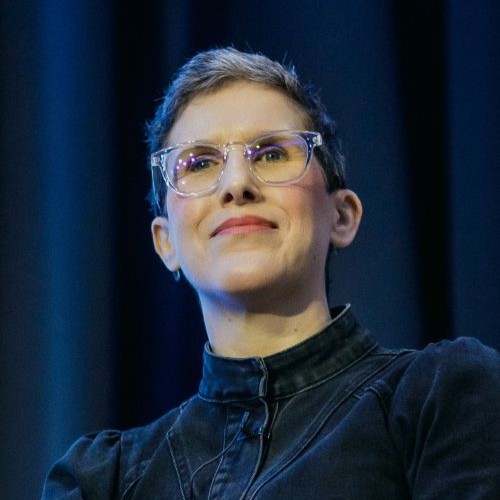
Dr Natasha McCarthy
In terms of the specific concern of the Committee, climate change and the energy transition is a central focus of the Royal Academy of Engineering’s policy and engagement programmes, representing as it does the engineering expertise and capability to deliver on this complex challenge. We note the Committee’s recommendation to abandon the phrase ‘net zero’ given the toxicity of the debate, but perhaps we should focus more on exploring what it really means? This includes the opportunities it can create, as well as what it takes to deliver it. Our Academy is actively working with government to fulfil the goal of delivering clean energy rapidly and effectively, and we have been bold in identifying the issues that are holding back the pace of this change, such as our recent report on the need to move more quickly in creating a digitalised electricity system. This, for example, is a critical step in enabling consumer-led flex, ‘using digital technology to automate households’ use and purchase of electricity to buy it when it is cheaper and greener, giving them greater ownership of their energy use and reduced bills without inconvenience or effort.’
Toxicity develops not when people reject what they are told, but when they feel they are not listened to. That is why we also invest in public dialogue, and listening to people, bringing engineers into conversation with communities across the UK to hear their experiences and give them a stake in engineering and policy decisions. Our public dialogue model brings engineers and innovators together with members of local communities, to have meaningful conversations on the promise and risks of technologies and to bring public voice into our policy work and thought leadership.
Our Local Energy Futures work has enabled local communities to have constructive conversations on what they want their community to do to deliver on the energy transition and we are working with both community energy groups and local government to drive uptake on that. And we have been listening to community members in Lincolnshire to hear their experiences and the costs they bear from climate change, in particular the impacts of high heat and flooding on them, so that we can advise on engineering-informed policy responses that really meet their needs. Through these engagements we have also heard people’s reservations about the Net Zero goal, and the committee is right to consider these. We are keen to help shape a constructive space for challenge and debate - not only on climate change and adaptation, but also on critical technologies such as AI, where our People’s AI Stewardship Summits directly connected people with the innovators in their area, giving space for meaningful dialogue.
Debate can also become toxic if it focuses too much on just one part of what is really a complex systems transition. We agree that the energy transition is not only about net zero, but about an energy system that is clean and sustainable, resilient and which provides affordable power for everyone. We welcome the Prime Minister’s emphasis on local opportunities as the transition is about listening to communities, giving them a role and ensuring a systems approach to the transition that reflects the UK’s needs in the full. We are ready to work with the Committee to ensure that we as an Academy play the essential role expected by the nation.
Related content
Futures and Dialogue
Using foresight techniques and engaging with the public and other stakeholders to inform policy and policymakers.
Why faster, better digitalisation is critical to UK energy goals
A new report from the National Engineering Policy Centre urging for prioritisation of digitalisation to secure Clean Po…
Net zero
Addressing climate change is a major challenge of the 21st century. At the Academy, we’re taking a systems approach to…