
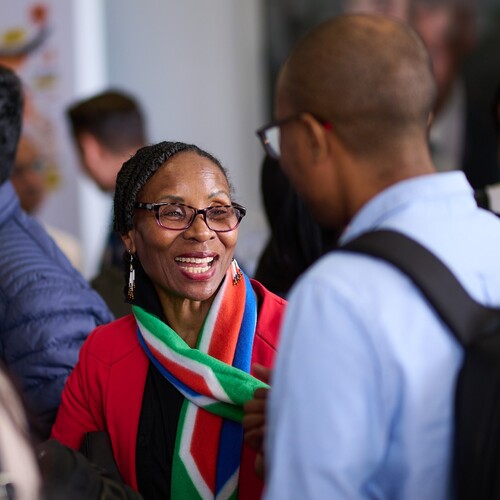
Conference overview and welcome
The conference will consist of four key sessions from leading global speakers.
Is Europe prepared for threats to its critical infrastructure and what preparations can be made to improve our resilience going forward? From ecological threats to supply chains, Euro-CASE 2026 will touch on all areas of engineering resilience.
The conference will be divided into four sessions:
- Session 1 - Setting the scene: How prepared are we for the next wave of threats to our critical infrastructure?
- Session 2 - Cutting it off at the source: what’s being done to prevent threats, and what can we do better?
- Session 3 - When the worst happens: stories about failure, recovery and renewal.
- Session 4 - Rethinking resilience for a challenging world.
The final conference session will be followed by an optional dinner, open to all attendees.
All conference sessions will also be broadcast online.
Session 1
Setting the scene: How prepared are we for the next wave of threats to our critical infrastructure?
Keynote, panel session and audience Q&A.
This opening session examines Europe’s readiness across interconnected physical and digital systems. We'll be asking whether we are preparing for the right risks, or the most visible ones. It will look at emerging vulnerabilities from across Europe as well as the trade-offs shaping resilience policy and investment.
Leading speakers from business, defence, international affairs and technology will provide their perspectives on the threats facing Europe and frame the engineering questions.
Featured speakers:
- Vice Admiral Mark Mellett, Former Chief of Staff, Irish Defence Forces.
- Andy Lord, Commissioner of Transport for London
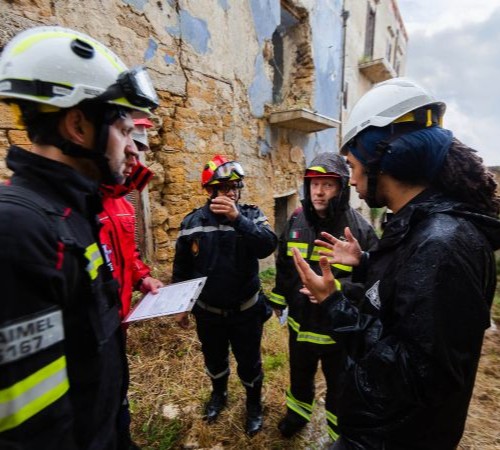
Session 2
Cutting it off at the source: what’s being done to prevent threats, and what can we do better?
Panel session with 5 speakers from a range of engineering backgrounds.
Focusing on prevention, this session explores how risks to critical infrastructure are identified and managed in practice, and where current approaches may still be designing fragility rather than resilience.
Ranging from energy transmission and transport systems to nuclear safety, this session will examine challenges such as building resilient socio-technical systems, securing the convergence of digital and physical infrastructure, and managing the risks of ageing infrastructure.
Featured speakers:
- Simin Nadjm-Tehrani, Department of Computer and Information Science, Linköping University.
- Enrico Zio, Professor, PSL University (France); Politecnico di Milano.
- Donna O'Shea, Cybersecurity, University of Limerick.
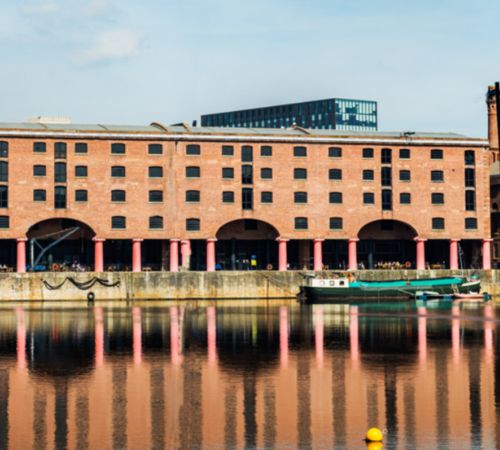
Session 3
When the worst happens: stories about failure, recovery and renewal
15 minute keynote, followed by a panel of 3 speakers and an audience Q&A.
Through real-world case studies, this session examines how critical infrastructure systems fail and recover, considering what separates systems that adapt under pressure from those that collapse.
Ranging from earthquakes and floods to ransomware attacks, this session looks at how engineers across Europe cope with disaster, learn lessons and adapt- and how we can better design our infrastructure to withstand future threats.
Featured speakers:
- Joshua Macabuag, CEO and Co-founder, Renew Risk.
- Tina Comes, Professor, Maastricht University.
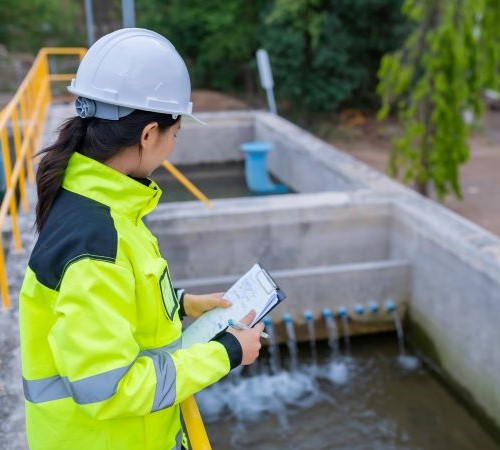
Session 4
Rethinking resilience for a challenging world
Five person panel
Bringing together senior industry leaders from industry, academia, and policy, this roundtable will reflect on whether current models of resilience are fit for an increasingly volatile and interconnected world, and how strategy must evolve in response. It will call on policymakers to pay heed to hard-won engineering lessons: resilience can’t be delivered overnight, and new approaches to risk management, system thinking and value for money are needed just as much as investment, if Europe is to be safe and secure in the coming decades.
Featured speakers:
- Nina Cromnier, Vice-Chair of the Department of Chemical Engineering.
- Dimitra Simeonidou, Professor of High-Performance Networks, University of Bristol.
- David Porter, President, Institution of Civil Engineers.
- Maire O’Neill, Vice President for Digital & Information Services, Queen’s University Belfast.
Sponsors

Supporters

This event is also partly supported by the UK Government's International Science Partnerships Fund (ISPF).