
UK IC Postdoctoral Research Fellowships 2026
The challenge
Audio deepfakes are AI-generated speech samples that allow a malicious person to artificially impersonate someone. These audio samples can be used to mislead, commit fraud, or spread misinformation. This harms not only the person being deep-faked, but also the people being misled. Automatic methods exist for detecting deepfakes and can be used to monitor social media or as tools for forensic scientists. However, they are built using known examples of deepfake speech and so only work well for previously-encountered forms of deepfake. Unfortunately, this approach cannot keep pace with the many different methods for creating deepfakes, which constantly improve and evolve. Human expert detection is not practical to use at scale and is also imperfect.
The research
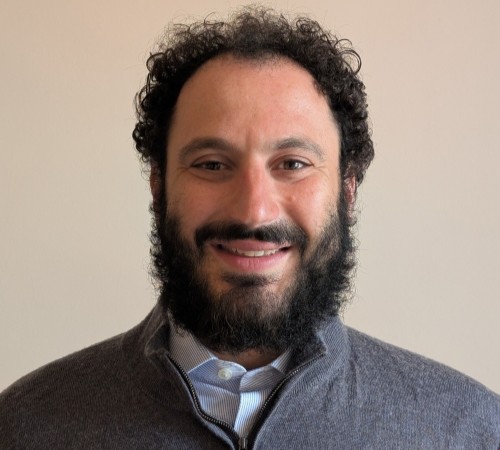
Dr Jacob Webber is taking a fresh approach to automatically detecting deepfake speech. We know that all natural, human speech is, by definition, produced by a physical system (the vocal tract), and that human speakers typically use a coherent set of linguistic features, e.g. a known language spoken with a consistent accent. He proposes to use these known attributes to build a strong model of natural speech, using cutting-edge AI technology. Crucially, he will not rely on any known examples of deepfake speech to create this model. The model will be able to detect deepfakes because they do not conform to the model in the way that natural speech does. The model will also provide explanations for why a test sample is classified as a deepfake, and will be robust against newly-emerging deepfakes created by the most sophisticated adversaries.
The researcher
Dr Webber is a machine learning research scientist specialising in speech technology and computer science. His experience spans rigorous academic research, including recent work presented at Odyssey, and industry-focused audio machine learning. With a background in physics, music, and audio digital signal processing (DSP), he is interested in the intersection of traditional acoustics and modern AI. His primary motivation is exploring how human knowledge of physics and DSP can be integrated with machine learning algorithms. By bridging these domains, he hopes to develop efficient and performant systems.
Related content
View all programmesSupport for research
The Academy runs a number of grants to support excellent researchers carry out engineering activities and to enable clo…
UK IC Postdoctoral Research Fellowships
These Fellowships are designed to promote unclassified basic research in areas of interest to the intelligence, securit…