
Research Fellowships 2026
The challenge
Cement production is responsible for 8-10% of global CO₂ emissions, while the industry depends on a narrow range of raw materials and energy intensive processing. Conventional cement replacements, such as fly ash and blast-furnace slag, are becoming increasingly constrained as the industries that produce them are phased down or decarbonised. At the same time, high quantities of abundant minerals, excavated soils and industrial residues remain underused because they lack sufficient reactivity. The opportunity is to expand the resources available for cement production, transforming locally available materials into valuable cementitious resources through electrified processing and enabling a more circular and resource resilient construction industry.
The research
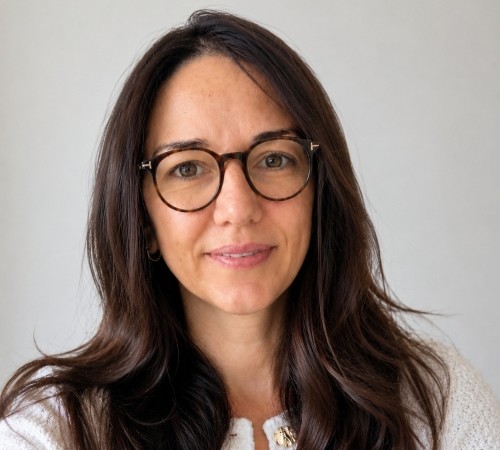
Dr Ilda Tole’s research investigates how mechanochemistry can transform underutilised minerals and industrial residues into reactive cementitious materials. The research will uncover how mineral composition, structure and processing conditions govern activation, building the fundamental understanding needed to unlock resources considered unsuitable for cement production. Dr Tole will also pioneer the co-grinding of materials with complementary chemical and mineralogical compositions, enabling different resources to work together and overcome their individual limitations. By integrating experimental research with atomistic modelling and machine learning, she aims to move material development beyond trial and error, towards the predictive design of mechanochemically activated cementitious materials.
The researcher
Dr Tole is a Research Fellow at the University of Bath specialising in mechanochemistry and sustainable cementitious materials. Her work focuses on transforming underused minerals and industrial residues into valuable resources for low-carbon cement and concrete. She currently leads research on CO₂-assisted mechanochemical activation within the European Innovation Council Pathfinder project X-SeeO₂, exploring new approaches to enhance mineral reactivity and carbon capture. Over the past years, she has developed expertise in the activation of clays and other mineral resources, working across fundamental materials science and industry led research. Her motivation is to expand the resources available for construction and develop new ways to unlock their potential.
Related content
View all programmesSupport for research
The Academy runs a number of grants to support excellent researchers carry out engineering activities and to enable clo…
Research Fellowships
Our Research Fellowships support outstanding early-career researchers to become future research leaders. Applications f…