
Research Fellowships 2026
The challenge
Soil pollution is a major global challenge that limits the safe redevelopment of land, threatens ecosystems, and contributes to climate change. Current methods for cleaning contaminated soils remove pollutants but release carbon dioxide and leave soils too weak for construction without further costly treatment.
The research
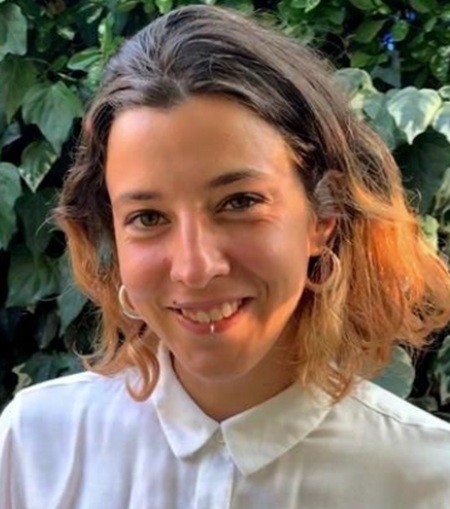
Dr Carla Comadran Casas aims to transform contaminated land into a resource by developing microbial technologies that simultaneously remove pollution, permanently capture carbon dioxide in stable minerals, and improve soil strength. This integrated approach will accelerate sustainable land regeneration while supporting net-zero and biodiversity goals. Dr Comadran Casas’ research is investigating naturally occurring soil microbial communities for their ability to perform a dual function: breaking down organic contaminants and permanently storing carbon dioxide underground.
These microbial communities can potentially capture the organic pollutants derived carbon dioxide into stable minerals that remain locked in the soil, while also strengthening the ground for future construction. The fellowship will investigate how to optimise this process under realistic contamination conditions, measure its overall carbon impact, and demonstrate its effectiveness at field scale. The goal is to create a practical, carbon-negative solution that helps regenerate contaminated land, reduce greenhouse gas emissions, and support more sustainable infrastructure development.
The researcher
Dr Comadran Casas is a researcher in geotechnical and environmental engineering, developing nature-based solutions to address global pressing environmental challenges. She is motivated by the opportunity to help drive the transition of ground engineering towards affordable, accessible and sustainable practices through novel biotechnologies. To achieve this, her work combines microbiology, ground engineering, circular economy principles, analytical chemistry, and environmental science to develop biotechnologies that harness natural microbial processes to tackle soil pollution, improve ground performance, and mitigate climate change simultaneously. Her research has applications in the redevelopment of brownfield land, former mines, and oil and gas extraction sites, supporting sustainable construction, carbon sequestration, contaminated land regeneration, and the recovery of land for housing, infrastructure, and biodiversity.
Related content
View all programmesSupport for research
The Academy runs a number of grants to support excellent researchers carry out engineering activities and to enable clo…
Research Fellowships
Our Research Fellowships support outstanding early-career researchers to become future research leaders. Applications f…