
Professor Dame Wendy Hall DBE FREng FRS, Regius Professor of Computer Science at the University of Southampton, is pictured in a new series of photographs of 50 of the UK’s leading engineers, specially commissioned by the Royal Academy of Engineering from photojournalist Jude Vidal to mark its 50th anniversary.
Dame Wendy is President of the British Science Association for 2026-27 and will discuss the future of AI in conversation with BBC Technology Editor Zoe Kleinman on Saturday 19 September during the festival.
Dame Wendy, who received the Academy’s Whittle Medal this year for her leadership in web science and shaping the UK’s AI strategy, says:
“I’m delighted that we can host this short exhibition at the university during the British Science Festival, showcasing the breadth of exciting careers in engineering. When I was elected a Fellow of the Academy in 2000, there were very few computer scientists in Fellowship.
“Today, computers are involved in every aspect of our lives and computer science has been embraced by the Academy. As we’ve seen in the news this week, AI is increasingly going to dominate our world and I am passionate about ensuring that safety, environmental and societal issues are at the heart of the way AI products and services are designed and developed.”
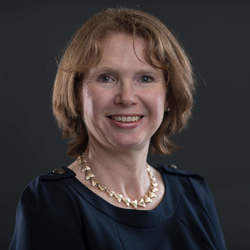
Professor Susan Gourvenec FREng, Professor of Offshore Geotechnical Engineering at the University of Southampton, also appears in the display. Susan’s research focuses on seabed characterisation and the design of foundations and anchoring systems for offshore wind turbines. She works across engineering, environmental science and the wider sciences to address complex offshore challenges and, like Dame Wendy, she is a strong advocate for equality, diversity and inclusion in engineering.
Professor Sir Bashir M Al-Hashimi CBE FREng FRS, Visiting Professor in the School of Electronics and Computer Science at the University of Southampton, Senior Vice President (Research & Special Initiatives) at King’s College London and Co-Director of the King’s Institute for Artificial Intelligence, also features. Sir Bashir’s pioneering work on energy-efficient computing has influenced digital technologies worldwide. He is committed to advancing skills, higher education, and to responsible use of technology in research and learning, collaborating on the future of scientific discovery and the role of AI.
Engineering better lives for 50 years
Jude Vidal’s new photos feature Fellows elected in every decade of the Academy’s history, from across the UK and beyond. The intimate portraits capture the people behind the breakthroughs – in their homes, labs, offices, workshops, and out in nature. From senior figures in industry and academia, to a new generation of entrepreneurs and problem-solvers, the photos offer a glimpse of what makes Fellowship of the Academy a unique achievement.
The unique images showcase 50 engineers whose innovation has helped to tackle some of humanity’s greatest challenges. From radar and telecommunications breakthroughs to cutting-edge AI, wind turbines, and satellites, these engineers have shaped – and continue to shape – the modern world.
Jude says: “The engineers I’ve had the privilege of photographing are some of the most remarkable people I’ve ever encountered. Doing relentless, world-shifting work, and doing it so quietly, so modestly. Their stories deserve to be told. The world needs the kind of hope that lives inside those stories. And young people need to see themselves in these portraits, to understand how big, how expansive, how genuinely exciting engineering is as a life.
“Every time I came away from a shoot I was in awe of what these people do. That feeling never got ordinary. It’s been one of the greatest honours of my career.”
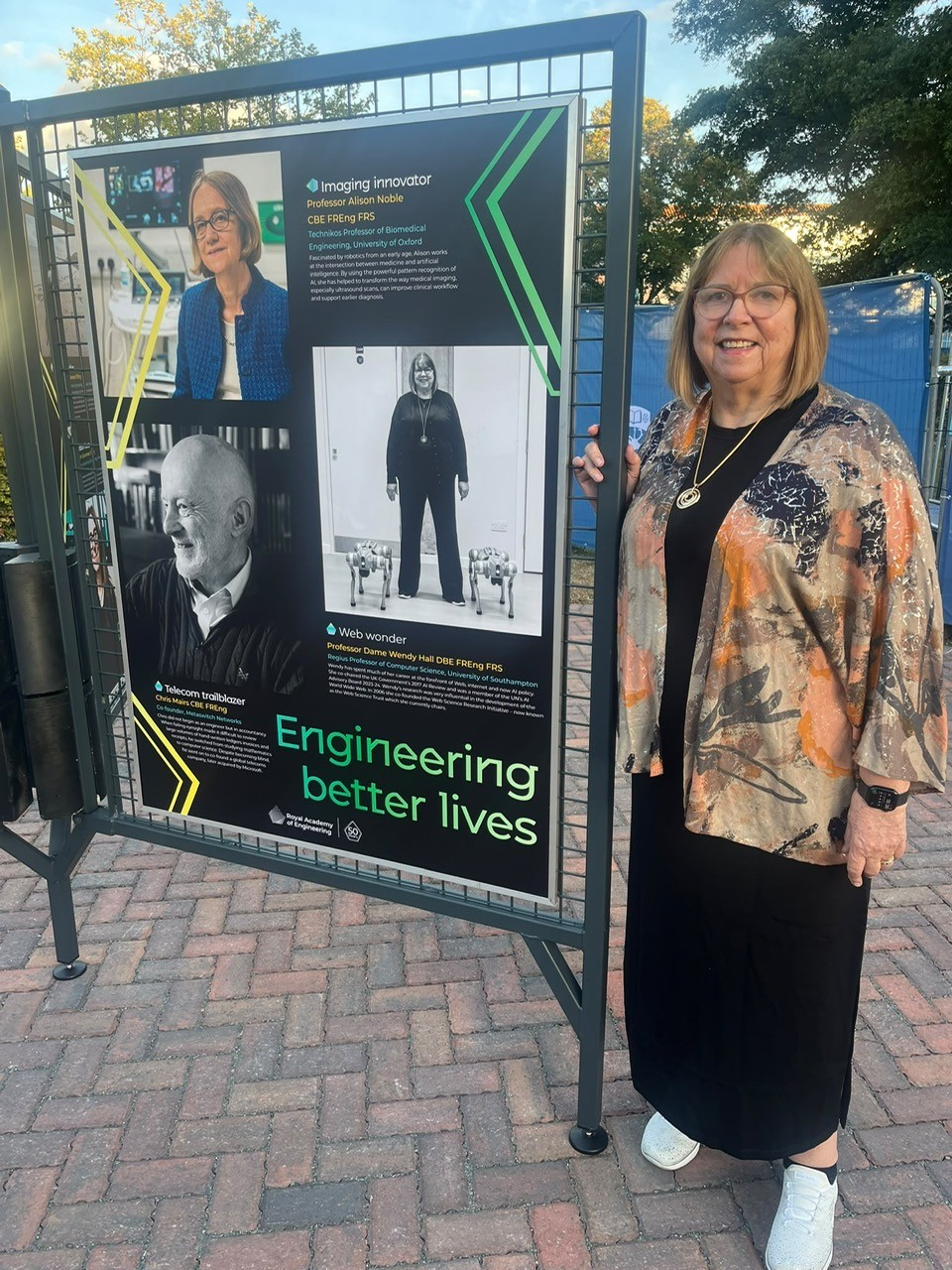
Dame Wendy Hall DBE FREng FRS with her section of the display at Southampton University, as part of the British Science Festival, for which she is President this year
Notes for editors
- Conceived during the excitement of the Apollo space programme and the buzz of Prime Minister Harold Wilson’s ‘white heat of technology’, the Royal Academy of Engineering was born in 1976, the year of Concorde’s first commercial flight.The first 130 Fellows were some of the most brilliant minds of the time. They included the jet engine genius Sir Frank Whittle, design guru Sir Ove Arup, radar pioneer Sir George MacFarlane, bouncing bomb inventor Sir Barnes Wallis, and Sir Maurice Wilkes, father of the UK computer industry. Today the Academy has over 1,700 Fellows and the boundaries of engineering have expanded more rapidly that anyone could have predicted 50 years ago. From optical fibre communications and artificial intelligence to engineering biology and graphene, engineers are changing the world.
- The Royal Academy of Engineering creates and leads a community of outstanding experts and innovators to engineer better lives. As a charity and a Fellowship, we deliver public benefit from excellence in engineering and technology and convene leading businesspeople, entrepreneurs, innovators and academics across engineering and technology. As a National Academy, we provide leadership for engineering and technology, and independent, expert advice to policymakers in the UK and beyond. Our work is enabled by funding from the Department for Business, Innovation, Science and Trade, corporate and university partners, charitable trusts and foundations, and individual donors.