
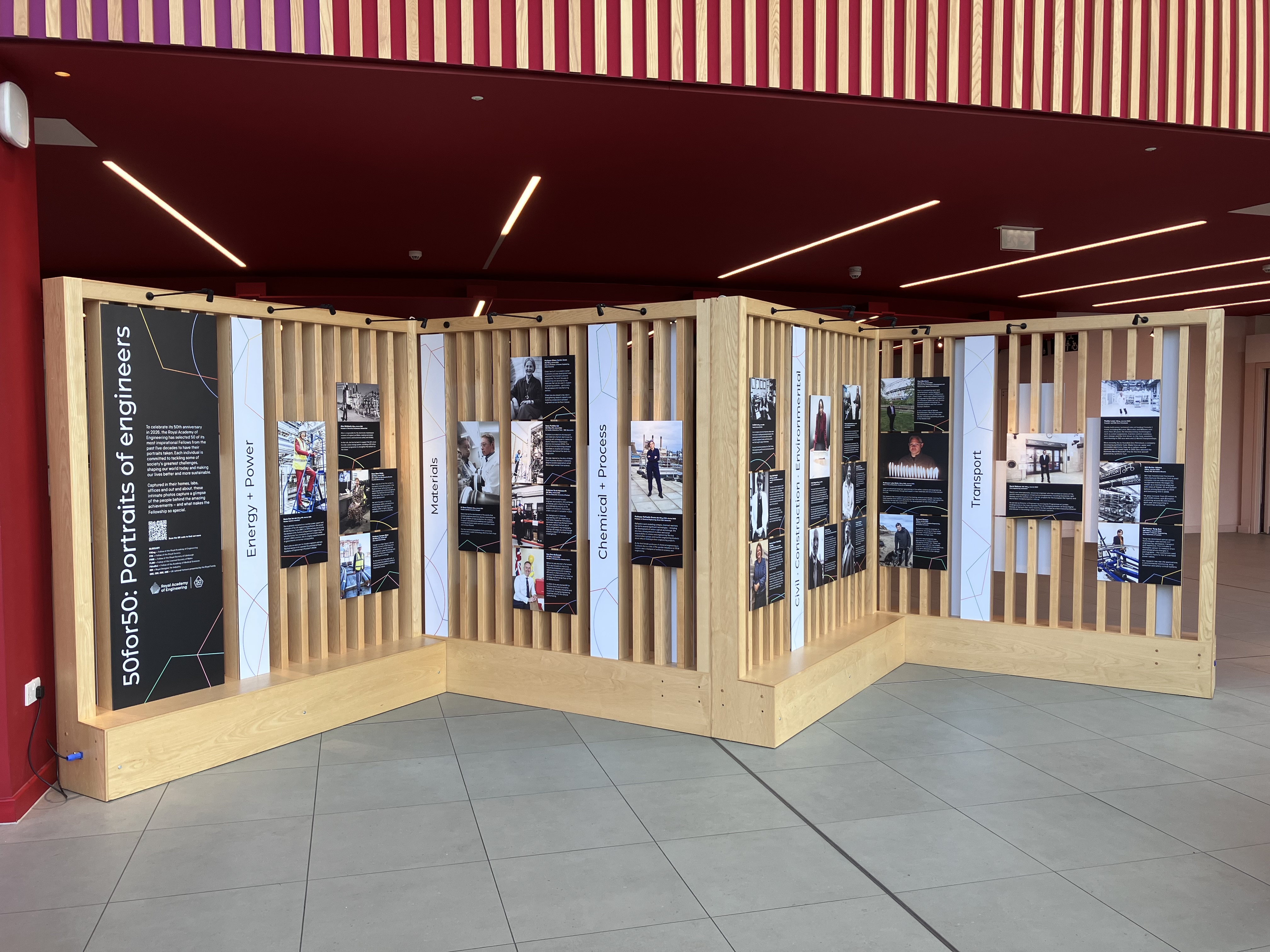
The National Science and Media Museum in Bradford will mark National Engineering Day on Wednesday 4 November with the opening of 50for50: Portraits of engineers, a striking photographic exhibition celebrating 50 engineers whose work has transformed lives across the UK and around the world. The exhibition has been commissioned by the Royal Academy of Engineering and is travelling to venues across the UK as part of its 50th anniversary celebrations.
Located in the museum's foyer and free to visit, the exhibition features powerful portraits by acclaimed photojournalist Jude Vidal, capturing a diverse group of engineers whose innovations have helped tackle some of humanity's greatest challenges. From advances in telecommunications, satellites and wind energy to breakthroughs in artificial intelligence, healthcare and computing, the exhibition shines a light on the people behind the technologies that shape our everyday lives.
The photographs include some of the UK's most influential engineering figures, including AI pioneer Sir Demis Hassabis CBE FREng FRS, National Grid President of Transmission Alice Delahunty FREng, Brompton Bicycle CEO Will Butler-Adams OBE FREng and leading nuclear engineer Dame Sue Ion GBE FREng FRS. They sit alongside engineers from every decade of the Academy's history, reflecting both engineering's rich heritage and its exciting future.
The intimate portraits, taken in homes, laboratories, workshops and workplaces across the UK and beyond, reveal the people behind the breakthroughs. Together, they tell a story of ingenuity, perseverance and creativity, while inspiring the next generation to consider engineering as a career that can make a real difference to society.
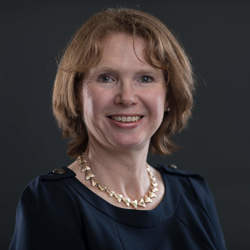
The exhibition also features several engineers based in and around Yorkshire, including Professor Catherine Noakes OBE FREng, a leading expert in the science of how airborne diseases spread through buildings based at the University of Leeds. As Professor of Environmental Engineering for Buildings at the University, Cath's research has focused on understanding the transmission of airborne pathogens such as influenza and tuberculosis, and on developing engineering solutions to control their spread.
She has worked closely with organisations including the NHS and UK Health Security Agency shaping approaches to infection prevention in healthcare settings and beyond. During the COVID-19 pandemic, Cath played a pivotal role as a member of the UK Government’s Scientific Advisory Group for Emergencies (SAGE) helping to explain how the virus spreads in indoor spaces and advising on practical mitigation measures including ventilation and air cleaning. Her work informed national and international policy and public guidance, influencing how workplaces, public transport, schools and public buildings responded to the crisis.
Also featured in the exhibition is Professor Sarah Hainsworth OBE FREng, Pro-Vice-Chancellor (Research) at Durham University. Sarah went to school in Baildon and then Richmond in North Yorkshire before moving to Newcastle-upon-Tyne for her degrees. She played a key role in the team that examined the remains discovered beneath a car park in Leicester in 2012 and helped identify them as those of King Richard III. Drawing on her expertise in forensic engineering, including knife crime and tool mark characterisation, she analysed weapon marks on the skeleton to help establish how the King died on the battlefield. The investigation also saw the first use of micro-computed X-ray tomography to analyse tool marks in an archaeological investigation.
Photographer Jude Vidal said:
"The engineers I've had the privilege of photographing are some of the most remarkable people I've ever encountered. Doing relentless, world-shifting work, and doing it so quietly, so modestly. Their stories deserve to be told. The world needs the kind of hope that lives inside those stories. And young people need to see themselves in these portraits, to understand how big, how expansive, how genuinely exciting engineering is as a life."
The exhibition forms part of the Royal Academy of Engineering's 50th anniversary year. Founded in 1976, the Academy brings together leading engineers, innovators, researchers and entrepreneurs to advance engineering for public benefit and help create a more sustainable, prosperous and inclusive future.
By opening on National Engineering Day, the exhibition highlights the vital role engineering plays in addressing some of the world's biggest challenges and aims to encourage visitors of all ages to discover the people, ideas and innovations that continue to change lives for the better.
Notes for editors
The National Science and Media Museum in Bradford, West Yorkshire, opened in 1983, and has since become one of the most visited UK museums outside London. It draws on more than three million objects from its national collection to explore the science and culture of image and sound technologies, and their impact on our lives.
The museum creates special exhibitions, interactive galleries and activities for families and adults, and is home to Pictureville, Yorkshire’s biggest independent cinema with three screens including Europe’s first IMAX and the only public Cinerama venue in the world.
As a charity, the museum relies on the generous support of individuals, businesses, and charitable trusts to continue its vital work. Discover how you can add your support.
The National Science and Media Museum reopened on 8 January 2025, following a £6m once in a generation transformation. The museum is open seven days a week, from 10.00–17.00. For more information and to book tickets, please visit our website.