
To celebrate its 50th anniversary in 2026, the Royal Academy of Engineering has commissioned a special series of photographs featuring a selection of its Fellows – some of the UK’s leading engineers – by photojournalist Jude Vidal. An exhibition of the work is touring the UK, with its next stop at Coventry’s West Orchards shopping centre until 6 October 2026.
The unique images showcase 50 engineers whose innovation has helped to tackle some of humanity’s greatest challenges. From radar and telecommunications breakthroughs to cutting-edge AI, wind turbines, and satellites, these engineers have shaped – and continue to shape – the modern world.
Jude’s new photos feature Fellows elected in every decade of the Academy’s history, from across the UK and beyond. The intimate portraits capture the people behind the breakthroughs – in their homes, labs, offices, workshops, and out in nature. From senior figures in industry and academia, to a new generation of entrepreneurs and problem-solvers, the photos offer a glimpse of what makes Fellowship of the Academy a unique achievement.
Jude has captured images of the people behind major engineering achievements over the last five decades, from the Channel Tunnel and the London 2012 Olympic Stadium to pioneering medical advances and the Raspberry Pi. She photographed Fellows including Google DeepMind founder Sir Demis Hassabis FREng FRS, Brompton Bicycle CEO Will Butler-Adams and top nuclear engineer Dame Sue Ion GBE FREng FRS.
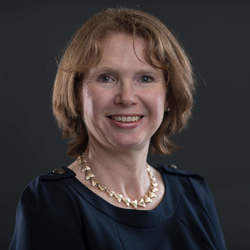
The West Orchards display, located on the first floor of the centre, includes four Fellows with local links:
- Dame Dawn Childs DBE FREng
CEO, nLighten, and Non-Executive Director, Pure Data Centres Group
Starting her career in the Royal Air Force, Dawn has led the engineering functions at Gatwick Airport, theme park company Merlin, and National Grid, before entering the rapidly expanding world of data centres, including a major nLighten data centre in Birmingham. Her work has focused on improving performance, safety and resilience across large-scale systems, often in safety-critical environments. - Alice Delahunty FREng
Chief Technology and Innovation Officer, National Grid
Appointed Chief Technology and Innovation Officer in September 2026, Alice oversees Group Engineering and Asset Management, IT and Digital and National Grid Partners. Previously, Alice was President of National Grid Electricity Transmission, responsible for developing and maintaining the electricity transmission network in England and Wales, including a £31 billion investment programme to support the UK’s transition to a low carbon energy system. National Grid’s Transmission Network Control Centre is based in Warwick. - Paddy Lowe FREng
Founder and CEO, Zero Petroleum
Over a career spanning more than three decades, Paddy has held senior technical roles at leading Formula One teams including Midlands-based McLaren, Mercedes and Williams, contributing to over 150 race wins and 12 World Championships. More recently, he co-founded Zero Petroleum, which is developing synthetic fuels as an alternative to fossil fuels. - David Waboso CBE FREng
Civil engineering consultant
David obtained a civil engineering degree at Coventry University and an MSc at Imperial College. He has worked on several prestigious infrastructure programmes including the upgrade of London Underground. After serving as managing director of Group Digital Railway at Network Rail, he has held several board positions across the energy, water and transport sectors. He is a visiting professor of civil engineering at Imperial College
Engineering better lives for 50 years
Conceived during the excitement of the Apollo space programme and the buzz of Prime Minister Harold Wilson’s ‘white heat of technology’, the Royal Academy of Engineering was born in 1976, the year of Concorde’s first commercial flight.
The first 130 Fellows were some of the most brilliant minds of the time. They included the jet engine genius Sir Frank Whittle, design guru Sir Ove Arup, radar pioneer Sir George MacFarlane, bouncing bomb inventor Sir Barnes Wallis, and Sir Maurice Wilkes, father of the UK computer industry.
Today the Academy has over 1,700 Fellows and the boundaries of engineering have expanded more rapidly that anyone could have predicted 50 years ago. From optical fibre communications and artificial intelligence to engineering biology and graphene, engineers are changing the world.
Notes for editors
-
The Royal Academy of Engineering creates and leads a community of outstanding experts and innovators to engineer better lives. As a charity and a Fellowship, we deliver public benefit from excellence in engineering and technology and convene leading businesspeople, entrepreneurs, innovators and academics across engineering and technology. As a National Academy, we provide leadership for engineering and technology, and independent, expert advice to policymakers in the UK and beyond. Our work is enabled by funding from the Department for Business, Innovation, Science and Trade, corporate and university partners, charitable trusts and foundations, and individual donors.