
It’s been a huge year for Space advancements: Artemis II has orbited the Moon, a spacecraft has reached Mercury, and a new telescope can scan the skies like never before. A new Space Age is dawning, but the question is: who’s going to build it?
The world’s greatest problems – climate change, health, AI, sustainability – can only be solved by engineers, and right now we don’t have enough of them. So, instead of hiring only today’s engineers, we’re doing something different: we’re ‘hiring’ the engineers of 2076 from the schools of today.
Homes and Structure
Contributions from Paul Westbury FREng & Abbie Hutty
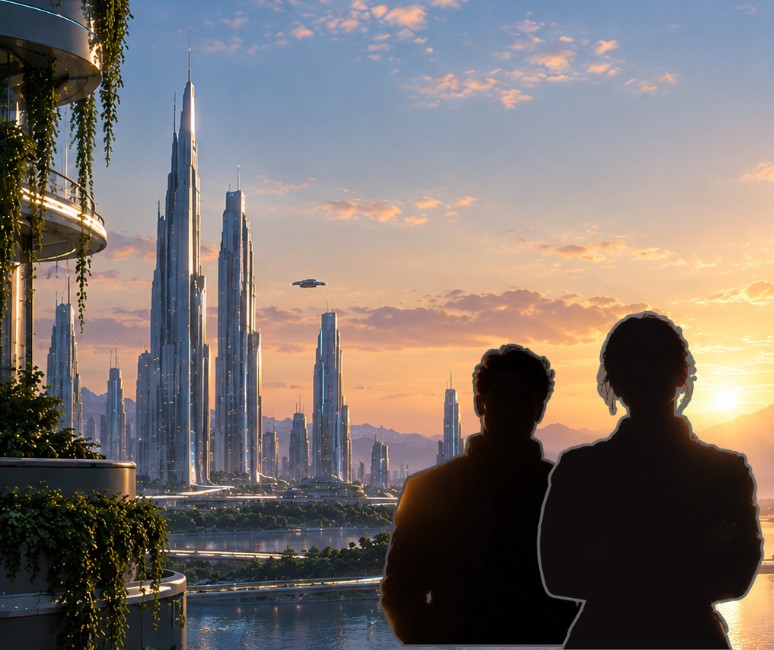
Today, living structures in Space provide only the bare essentials needed for survival. In 2076, there will be innovations that transform them into homes where we can thrive: lights triggering our circadian rhythm, artwork, plant-life, even pets. Back on Earth, the same thinking could help us create more sustainable, comfortable homes where space is limited, making better use of resources while still prioritising people’s wellbeing. We’ll need multi-disciplinary engineers, architects who can design for wellbeing, and structural experts who can innovate with unfamiliar materials in harsh conditions.
Food & Agriculture
Contributions from Ben Crowther
In 2076, with resources finite, food moves to the forefront of the agenda. Diets will become primarily functional: animal agriculture minimised or eradicated, staple carbohydrates replaced with nutrient-rich root vegetables, and circularity the chief concern. Back on Earth, climate pressure could make land and water more finite too, pushing more food production into controlled indoor environments and making automation, disease prediction and circular growing systems increasingly important. It’s why we need engineers skilled in hydroponic agriculture, waste management and flavour innovation
Life Support
Contributions from Eleanor Stride OBE FREng, Medical & Human Factors
Healthy living off-world requires input from all sectors of life. Buildings will be engineered for optimum breathing, light and sleep; clothes to protect us from the Sun; food to create the perfect gut microbiome. Health in 2076 may be designed into our environment, rather than dealt with only when we become ill - and that takes a wide range of engineering skills.

Beauty & Personal Care
Contributions from Dr Rita Palumbo and Dr Oliver Worsley
With minimal water, personal care will have to be adapted, but not disregarded - instead, shifting from reactive to preventative. DNA sequencing will enable targeted skin and tooth treatments, while engineers and circularity experts will be needed to produce high-UV skin shields and turn hair and nail clippings into useful keratin-rich products. On Earth, the same advances could support less water-intensive, more preventative and personalised personal care routines, as climate change puts greater pressure on resources and creates new challenges for skin health.
Fashion & Textiles
Contributions from Vinita Marwaha Madill
Tomorrow’s clothing could be second-skin bio-suits moulded to our bodies against radiation, with smart fabrics monitoring vitals and compression garments reducing muscle wastage. On Earth, the same innovations could make clothing smarter and more sustainable, with self-cleaning fabrics that need less washing, longer-lasting materials, and sensor-enabled garments supporting health, sport and rehabilitation. Tomorrow’s styles will be created by engineers as much as artists: skilled in self-cleaning textiles, protective materials, and medical wear
Entertainment & Technology
Contributions from Dr Andrew Fitzgibbon FREng FRS
Artistic endeavours thrive in environments with finite resources, and 2076 will be no different. VR could feed movies directly into our brains for a fully immersive experience, while artificial gravity will reinvent sport in Space. Entertaining off-world families needs engineers as capable in artistry as in technology.
Communications
Contributions from Wing Commander GRW Jones and Dame Dawn Childs FREng
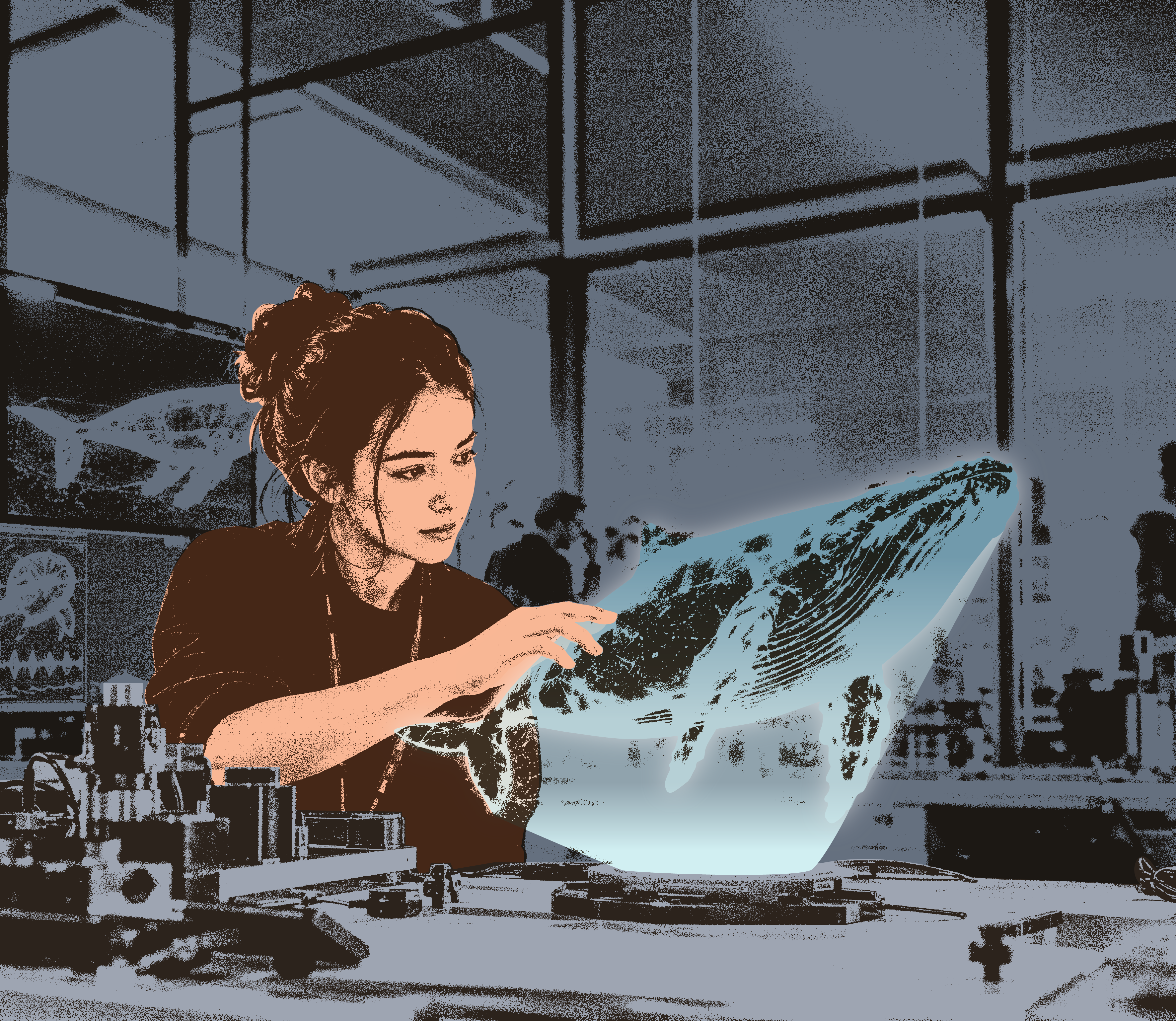
Signals could take up to 25 minutes to reach Mars, making real-time conversation impossible and forcing humans to rediscover the art of waiting. Conversations will need to be engineered differently – said clearly, in full, the first time – though VR-powered hologram calls mean nobody need feel homesick despite the distance. Back on Earth, laser-based communications developed to bridge those vast distances could also increase the amount of data transmitted by satellite, improving bandwidth and connectivity.
Power
Contributions from Dame Sue Ion FREng
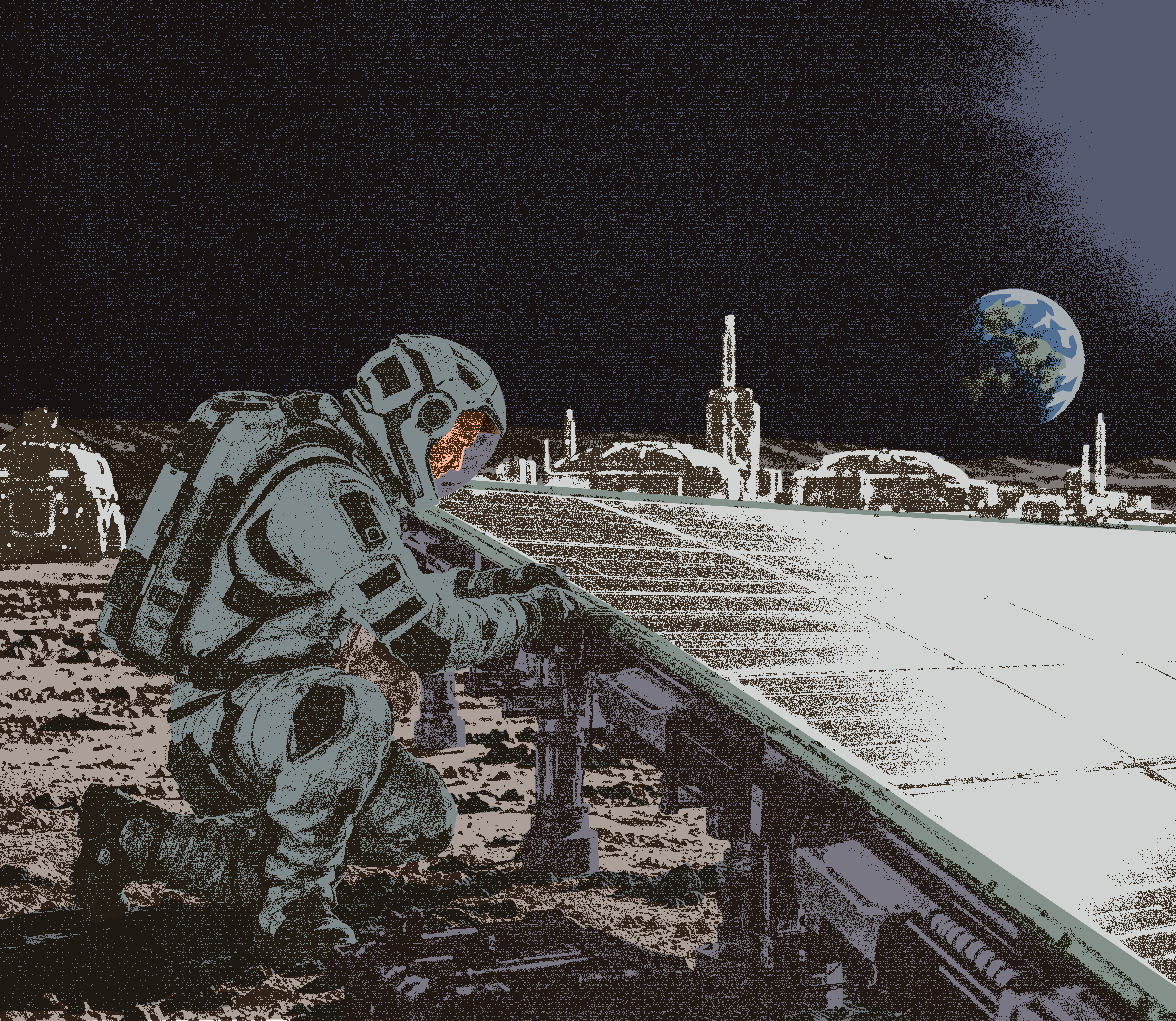
Off-world societies will need power for everything: heat, light, communications, life support, drawing on solar power where the Sun allows and nuclear batteries further out. But powering life off-world is about managing energy, not just generating it, so we need systems engineers who can conserve finite resources wisely.
Transport
Contributions from Dr Leah-Nani Alconcel and David Mackay
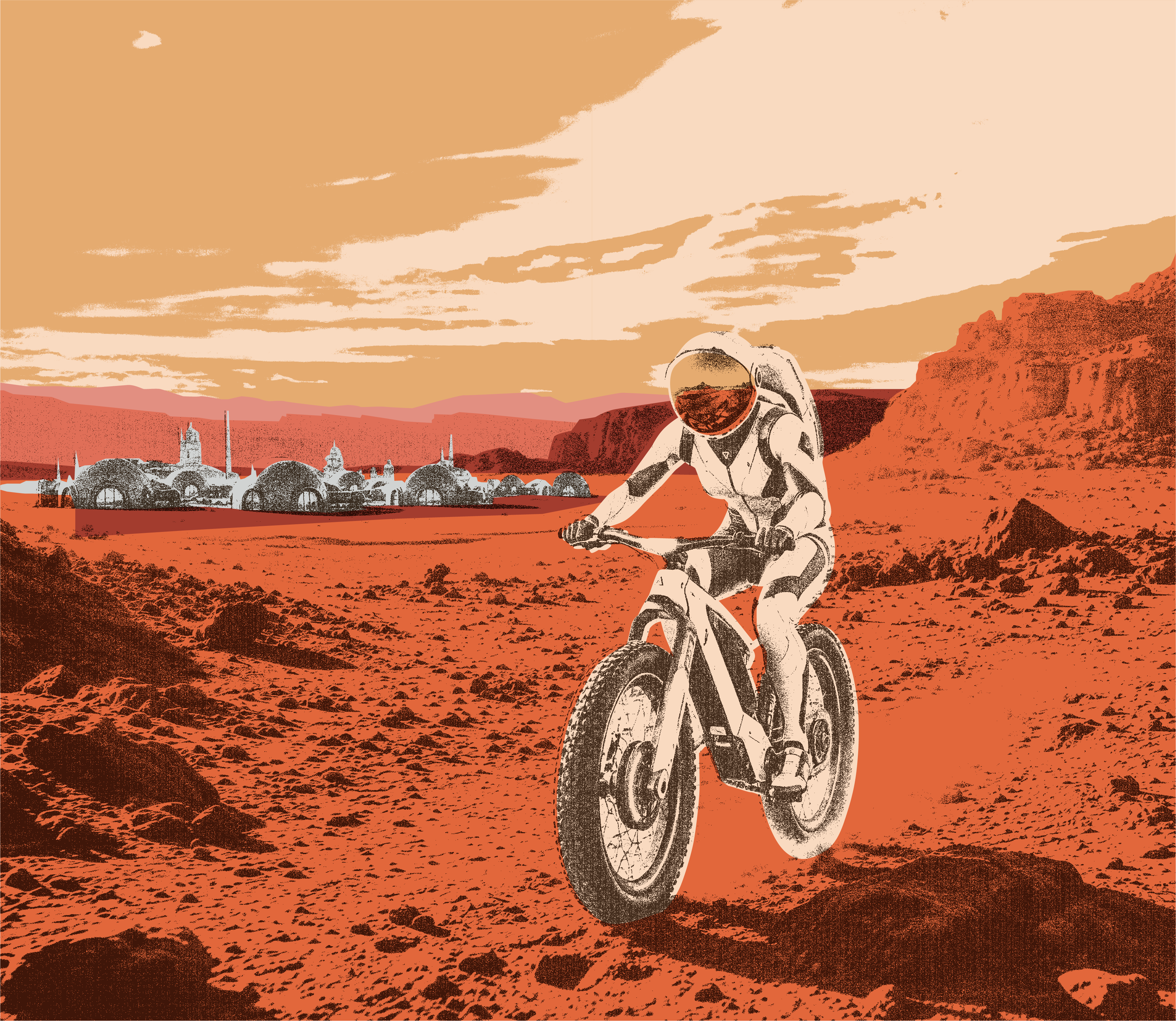
In 2076, most transport will be self-propelled: bikes, scooters and walking, made easier by low gravity - alongside marked routes for rovers and trains. But in emergencies, millions of miles from Earth, quick rides home aren’t an option. Tomorrow’s transport engineers will need a holistic skillset, not just vehicle-building expertise.
Waste Management
Contributions from Professor Richard Dawson FREng
Nothing can be wasted in an isolated, resource-poor environment: human waste becomes fertiliser, broken equipment is repaired or 3D-printed anew. The same closed-loop thinking could reshape life on Earth too, with fewer single-use products and more materials designed to be repaired, reused or remade rather than thrown away. We need engineers who can keep every material in circulation for as long as possible.
Manufacturing & Self-Sufficiency
Contributions from Dr Gilles Bailet and Dr Rita Palumbo
Future off-world settlements will need to manufacture and repair far more of what they use locally, rather than relying on supplies from Earth. Advances in 3D printing could allow communities to produce replacement parts, tools and structural components on demand, but true self-sufficiency will also depend on being able to manufacture electronics locally. We’ll need engineers who can build active systems with embedded electronics and make increasingly complex technology away from Earth.
Why this matters
None of the everyday life functions we take part in today work without engineers, and the same goes for Space. The future of Space isn’t just about rockets. It’s about the people who’ll make life up there feel like home, and we need today’s schoolchildren to see themselves as the ones who’ll build it.