
Speaking at the Royal Society's Women and the future of science conference today, the Secretary of State called on research institutions and funders to do more to support women in research and launched a new voluntary charter, including commitments to paid maternity leave for PhD students, more help to return to work and flexible working.
She also announced enhanced funding for the Daphne Jackson Trust fellowships, which help people to restart their careers in research, providing tailored fellowship support for those who have taken a career break.
Dame Tamara Finkelstein DCB, Chief Executive of the Royal Academy of Engineering, said:
“Women face persistent structural and cultural barriers that limit their ability to thrive in research careers, particularly in engineering and technology, where only 24% of academic staff in UK higher education are women, compared with 49% across the sector as a whole. We strongly welcome the Secretary of State’s leadership and the commitment to develop a new charter to better support women across the research system. As a research funder committed to innovative positive action measures to accelerate equality for women researchers, we will be glad to help shape and sign up to the charter and play our full part in helping it succeed.
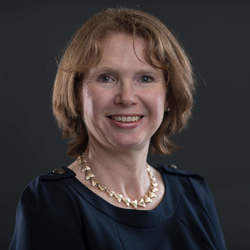
"For this charter to drive meaningful and lasting change, it must be ambitious, setting clear expectations for funders, employers and government to tackle the systemic obstacles that hold women back. It must learn from and seek wider adoption of evidence-based interventions that are working and encourage further innovation for change. We look forward to working closely with DSIT and partners across the sector to help shape a charter that raises standards, strengthens accountability and creates the conditions in which women can genuinely progress and succeed. These barriers are not about women’s capabilities; they are about the environments we create and the assumptions and behaviours we allow to persist. It’s not about fixing the women, it’s about fixing the system in which they work. Addressing the barriers will unlock talent that the UK so desperately needs in order to have the greatest impact, and cannot afford to lose.”
Notes for editors
- The data on women in academia is based on: HESA Staff (excluding atypical) FPE, 2024/25. The latest data available for the designated engineering and technology cost centre group in UK higher education (HE) shows that there are 31,850 full-person equivalent academic research and/or teaching staff, of which 7,710 or 24% are women. This contrasts with 49% women academic professionals across the whole HE sector.
- The Royal Academy of Engineering creates and leads a community of outstanding experts and innovators to engineer better lives. As a charity and a Fellowship, it delivers public benefit from excellence in engineering and technology and convene leading businesspeople, entrepreneurs, innovators and academics from every part of the profession. As a National Academy, it provides leadership for engineering and technology, and independent, expert advice to policymakers in the UK and beyond. The Academy’s work is enabled by funding from the Department for Science, Innovation and Technology, corporate and university partners, charitable trusts and foundations, and individual donors.