

Malcolm Macdonald is a Professor of Applied Space Technology at the University of Strathclyde. He is known for his role in shaping the future of the space sector, both nationally and internationally. As Founding Director of the Scottish Centre of Excellence in Satellite Applications, he was instrumental in driving the growth of the Scottish space sector and helped shape the UK Space Agency.
The Academy’s Policy team spoke to Malcolm about the ethical considerations that underpin space technologies, and the practical steps engineers can take to ensure these systems are designed and delivered responsibly.
What are space technologies?
Space technologies, including satellites, robots, and advanced sensors, are used for Earth observation and global communication, and have a diverse range of applications for everyday societal needs. With application in areas such as improving GPS, accurate weather forecasting, and even supporting disaster management, this work affects services for public and businesses and so can have a direct impact on society. Engineers are involved with designing building and testing of these systems. Engineers working with space-based technologies must also grapple with environmental impacts, working with critical material supply chains and carbon intensive ways of working to put infrastructure in space, all of which have a direct impact on our planet and sustainable development.
What are the critical ethical issues in this area?
Space technologies can cover a broad range of sectors, each with their own ethical considerations. For example, in human spaceflight, the critical issues are in safety. In satellite and GPS technologies, the critical issues are in the nature of dual-use applications. Such applications provide public services and benefit as well as military applications that have potential to cause harm be misused.
Space technology can have positive environmental impacts, for example Earth observation can inform environmental monitoring. However, there can also be significant impacts that need to be managed. Rocket launches inject a host of pollutants directly into the atmosphere and can reside there for years. As more launches are planned, the collective impact of these contaminants on the environment needs to be considered. Emissions also include greenhouse gases that work against net zero targets. We need to understand the specific impact that we have on life and consider how we can balance the societal benefits with the fact that there is an effect on the environment and climate.
At the decommissioning stage, there is a challenge of debris falling back to Earth and burning up in the atmosphere. Historically, we’ve only had a few spacecraft, but we now have tens of thousands of satellites and lots of new planned launches. While we are starting to take action to understand the impact of debris and what burns up in the atmosphere, there is more to do to minimise the negative consequences.

There are clear public benefits and growing opportunities, but progress must be managed carefully to understand and reduce environmental trade‑offs.
There are a variety of emerging proposals for commercial activities in space, including mining, space tourism, or even hosting data centres. Whilst the practicalities are still to be explored, political interest is most often driven by economic interest without giving fair consideration to the environmental impact. For example, we’re a long way from space mining being considered an economical alternative to traditional practices on Earth as the cost of returning space-based materials to Earth would be a barrier. Though there are known social and ethical concerns in Earth-based mining, and there would be a potential for improving traceability for materials returning on spacecraft, the cost impact is still too high for it to be a viable business model.
Why are these ethical issues particularly important?
Space doesn’t have meaningful territorial control and there is often an expectation that countries or businesses that launch first can claim ownership. These activities can then be self-regulated, without the assurance of consistent approaches to mitigating environmental impact, or the assurance that benefits will be shared across the communities that need them. Given the range and scale of activities likely in the space environment in the coming years, we will need to develop and mature regulatory approaches both internationally and domestically.
Which of the ethical principles are most important here?
Each of the ethical principles have stood the test of time and have relevance today. I believe that how we manage data and mitigating environmental impacts are key challenges in the space sector, and so the principles for responsibility to society, and responsibility for the future of technology and the environment are fundamental. We often work with large amounts of data, and sensitive data, and we must recognise the importance of data security and responsible use of information for developing intended services. Engineers use technology as well as develop it, and so using technology in an ethical way is equally important. Understanding the sustainability of some technologies, such as AI-based tools, and making informed decisions about the wider impacts is a key part of ethical practices.
There are clear public benefits already being achieved from space technologies but as we look to grow these services, we must be working in ways that address and mitigate safety and environmental trade-offs. The ethical principles typically form part of university courses to support new engineers to have the skills to make these trade-off decisions.
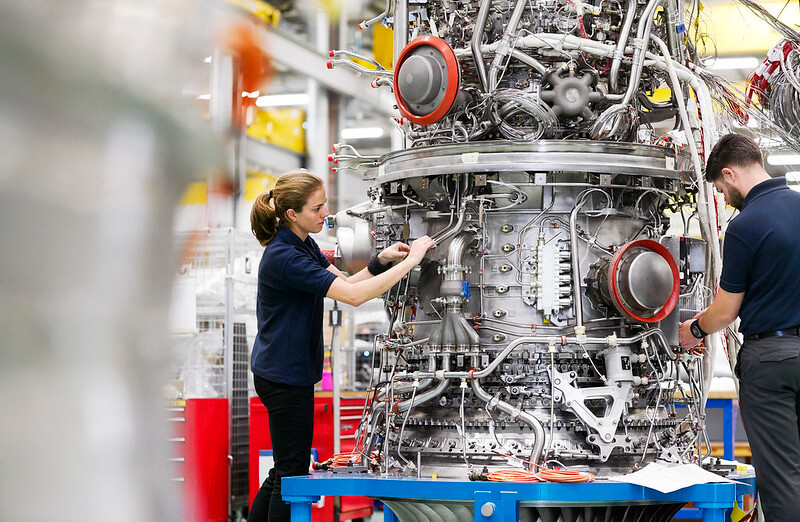
Each of the ethical principles have stood the test of time and have relevance today.
What can engineers do differently on this issue?
We need to engage with people who use space-based services; it is important to communicate the value of what we do and to be clear about the underlying ethical challenges and how they are addressed.
In the space sector we are often working with systems that can be applied to sectors which can be seen as ethically problematic. It can be the case that engineers focus in on their specific technical challenges, but it is essential to also consider how the final technology will be used.
Designing and developing new technologies or space-based services needs to be framed around the perspectives of the communities they are intending to work for.
What are the risks of doing nothing?
If we do not address the challenges for managing waste created by the space sector, given the demands for more assets and rising levels of debris, we could lose access to the space environment as it becomes too crowded. Approximately 12% of the UK GDP is based on the space sector and there is a strong focus on commercial opportunities, but this must include considerations for mitigating our environmental impact and thinking both of sustainability on Earth and for the space environment.
What challenge would you set any engineer working in this area?
Get out of the bubble! In the space sector, I have seen examples where people have convinced themselves of a market for a new service, move forward with development, and then are faced with a lack of interest. Designing and developing new technologies or space-based services needs to be framed around the perspectives of the communities they are intending to work for.
Local knowledge and lived experiences can be extremely valuable in understanding what new innovations we can be working towards and it’s important not to make assumptions about what products people will want. I would challenge people to be proactive in seeking input on the benefits and concerns people have around ideas for new space technology developments so that this information can inform your work.
EDI practices are important in any sector, and the typical workforce within space-based sectors are not very diverse. All engineers should be aware of, and proactively working for, inclusive practices as part of addressing wider societal challenges.

It’s important not to make assumptions about what products people will want.
Related content
Engineering Ethics: Q&A with Richard Maudslay
Richard Maudslay, Director of Laser Light, explores the ethics behind insulating homes.
Engineering Ethics: Q&A with Luke Bisby
World-leading researcher and educator, Professor Luke Bisby, explores the ethics behind structural engineering and fire…
Engineering Ethics: Q&A with David Bogle
David Bogle, Emeritus Professor of Chemical Engineering at UCL, explores the ethics behind responsible engineering biol…